

Home » The Museum » Mosaics
Brading Roman Villa has some of the finest mosaics discovered in Britain. Dating from the 3rd and 4th century AD they tell the stories of Roman myths, gods and goddesses.
Preserved in the soil until their discovery in 1879 they are made using natural materials found both locally on the Island and along the Dorset coastline.
Many experts have tried to decipher the story of the stones, especially with some of our unique panels such as the cockerel headed man.
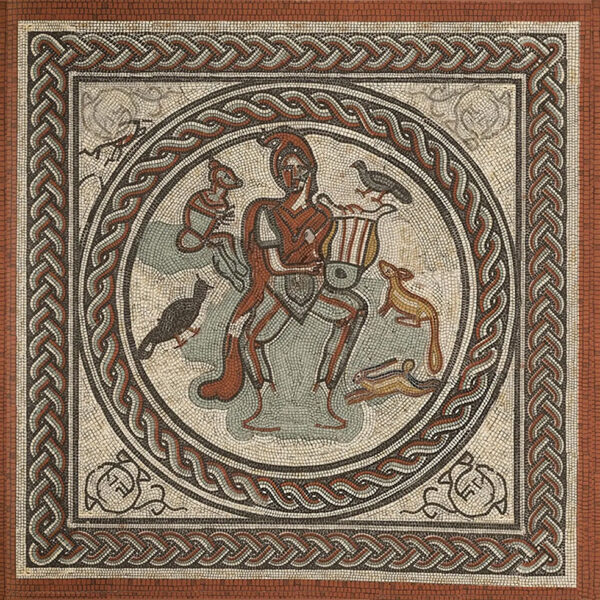
This was first mosaic to be found by Captain Thorpe and Farmer Munns and is the most intriguing of all. It is the only one of its type found so far in Britain and the Roman empire. Who is it depicting? What do the symbols around him mean? Some of our other mosaics have more recognisable figures such as Medusa, Bacchus and Orpheus.
He wears a Phrygian cap and is surrounded by the animals charmed by lyre-playing.
Bacchus was the God of wine, the grape harvest, fertility, merriment and theatre.
Ceres was the goddess of agriculture, grain crops, fertility and motherly relationships.
The Romans called them Venti they were gods who were each given separate directions and were each associated with various seasons and weather conditions.
Brading Roman Villa, Morton Old Road, Brading, Isle of Wight, PO36 0PH
(Sat Nav use PO36 0EN)
Tel: 01983 406223
Cookies help us improve your experience, deliver personalised content and analyse traffic. You can choose which cookies to allow by clicking View Preferences. Click Accept All to consent or Reject All to decline non-essential cookies.
| Open throughout the year |
| Opening Days: Tue – Sat |
| Museum: 10am – 4pm
(last entry: 3pm) |
| Café: 10am – 3pm
(last food orders: 2.30pm) |
| Closed: Sun & Mon |
Dogs are not permitted inside the museum, visitor centre or café. They are welcome outside in the grounds on leads.
We are a no smoking or vaping site.
| Adult: | £15.40 |
| Concessions: (students & seniors over 60) | £14.40 |
| Child: (5-15 Years) | £8.15 |
| Family: (2 adults and up to 3 children) | £39.00 |
Pay once, visit all year
Enjoy unlimited visits! With your ticket, you can return to the Villa as many times as you like for a whole year.
If you are a UK taxpayer, an additional way to support the museum is by using Gift Aid.
If you are a UK taxpayer, an additional way to support the museum is by using Gift Aid.
We are able to claim Gift Aid on pay once, visit all year tickets. When you book online or buy your ticket at the museum, we will ask you if you are a UK taxpayer and if you are happy for us to claim Gift Aid on your ticket purchase. As a registered charity, this means we can claim an additional 25p on every £1 which makes a real difference to Brading Roman Villa Trust’s work to continue to protect and conserve the site for the future. All you need to do is give your permission when you buy your ticket. So, if you purchase a family ticket and select Gift Aid, we can claim £9.75 from the government.
By allowing us to claim Gift Aid, you are declaring that you are a UK taxpayer and understand that if you pay less Income Tax and/or Capital Gains Tax than the amount of Gift Aid claimed on all your donations in that tax year it is your responsibility to pay any difference. If you pay Income Tax at the higher or additional rate and want to receive the additional tax relief due to you, you must include all your Gift Aid donations on your Self-Assessment tax return or ask HMRC to adjust your tax code.
If you are a UK taxpayer, an additional way to support the museum is by using Gift Aid.
We are able to claim Gift Aid on pay once, visit all year tickets. When you book online or buy your ticket at the museum, we will ask you if you are a UK taxpayer and if you are happy for us to claim Gift Aid on your ticket purchase. As a registered charity, this means we can claim an additional 25p on every £1 which makes a real difference to Brading Roman Villa Trust’s work to continue to protect and conserve the site for the future. All you need to do is give your permission when you buy your ticket. So, if you purchase a family ticket and select Gift Aid, we can claim £9.75 from the government.
By allowing us to claim Gift Aid, you are declaring that you are a UK taxpayer and understand that if you pay less Income Tax and/or Capital Gains Tax than the amount of Gift Aid claimed on all your donations in that tax year it is your responsibility to pay any difference. If you pay Income Tax at the higher or additional rate and want to receive the additional tax relief due to you, you must include all your Gift Aid donations on your Self-Assessment tax return or ask HMRC to adjust your tax code.